
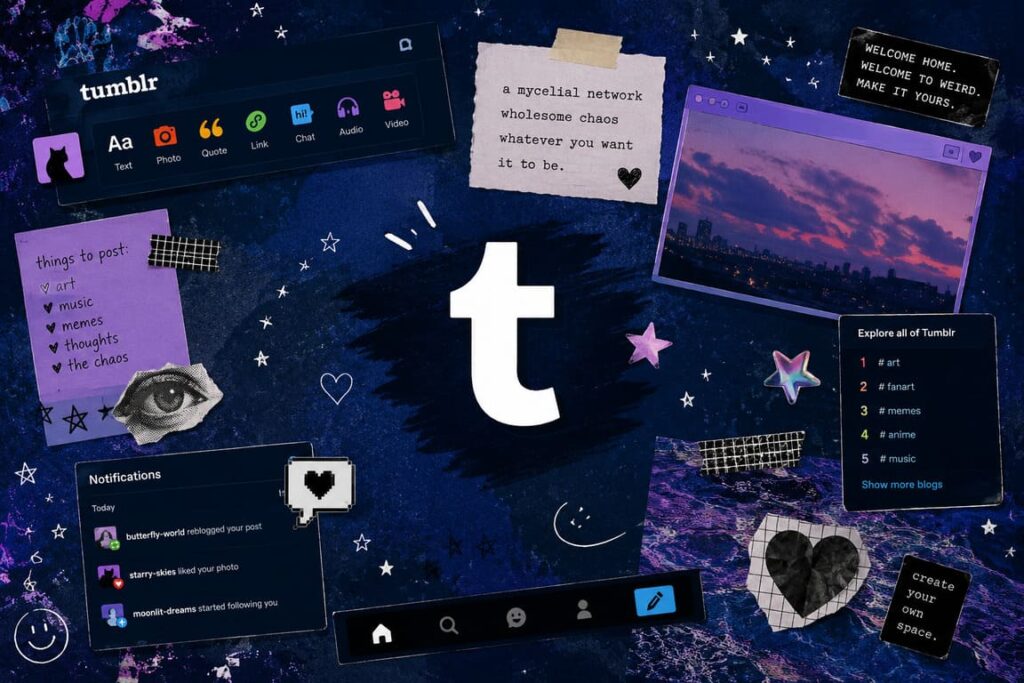

Tumblr is one of the few old internet platforms that still feels like it belongs to users more than advertisers. It started in 2007 as a microblogging and social networking site founded by David Karp. Today, Tumblr is owned by Automattic, the company behind WordPress.com. At its core, Tumblr lets people post short-form content in many formats: text, photos, GIFs, quotes, links, audio, and video. Source
What makes Tumblr different is not just the format. It is the culture. On its official about page, Tumblr describes itself in a playful way: “a mycelial network,” “wholesome chaos,” and even “whatever you want it to be.” That tone fits the platform well. Tumblr has always been less polished than mainstream social apps and more open to fandoms, art, identity, jokes, and niche communities.
A Short History of the Company
Tumblr began development in 2006, and it officially launched in February 2007. According to Wikipedia, it gained 75,000 users within two weeks, which shows how strong the early interest was. The idea was simple: make blogging faster, shorter, and easier than traditional blogging tools.
The business history of Tumblr is just as interesting as the product. In 2013, Yahoo agreed to buy Tumblr for $1.1 billion in cash. Later, after Yahoo changed ownership, Tumblr moved under Verizon’s media group. In 2019, Verizon sold Tumblr to Automattic. Since then, Tumblr has stayed alive as a separate platform rather than being merged into WordPress.com.
In 2024, Automattic said it had made Tumblr more efficient, improved revenue, and started a major project to run Tumblr’s backend on WordPress infrastructure. Automattic also said this would not change Tumblr’s identity from the user side. The company described the migration as one of the largest technical migrations in internet history and said Tumblr hosts over half a billion blogs.
How Tumblr Works
Tumblr is built around personal blogs, but those blogs are connected through a shared social feed. The main product feature is the dashboard, where users see posts from accounts they follow. From there, they can like, reblog, comment, or post their own content. This makes Tumblr feel like a mix of blogging platform, meme machine, and community forum.
A few features stand out. Tumblr has a queue system that lets users schedule posts over time. It also has a strong tagging system, which is important because tags help people find content and also act as a style of communication. Another notable feature is HTML theme editing, which gives users more control over the visual style of their blog than most modern social apps allow. Tumblr also supports messaging and an “Ask” feature for audience interaction.
Why People Still Use It
Tumblr has survived because it offers something many bigger platforms do not: personality. On Instagram, TikTok, and X, users often feel pressure to perform. Tumblr feels more like a corner of the internet that you shape for yourself. That is why it has long appealed to artists, fandom communities, writers, and LGBTQ+ users. Wikipedia notes that Tumblr has been known for socially progressive communities and for being a place for identity exploration and community-building.
The official branding supports that feeling. Tumblr says, “Welcome home. Welcome to weird. Make it yours.” That message may sound silly, but it captures the real value of the site. Tumblr is not the cleanest or most efficient social platform. It is one of the most expressive.
Strengths and Weaknesses
What Tumblr does well
- Strong identity — Tumblr still feels different from mainstream social apps.
- Flexible posting — text, GIFs, memes, quotes, photos, and more all fit naturally.
- Reblog culture — sharing on Tumblr often adds humor, context, or commentary instead of just copying content.
- Customization — blog themes and HTML editing give users more visual control.
- Community depth — niche interests can still find active audiences.
Where Tumblr struggles
- Its culture can feel confusing for new users.
- The interface is not always as simple as newer apps.
- Tumblr’s ownership history has been unstable.
- Some recent company decisions, including the reported AI training data policy announced by Automattic in 2024, may worry privacy-conscious users.
Quick Facts Table
| Category | Tumblr |
|---|---|
| Website | tumblr.com |
| Founded | 2007 |
| Founder | David Karp |
| Current Owner | Automattic |
| Core Type | Microblogging and social networking |
| Main Content Types | Text, images, GIFs, video, audio, quotes, links |
| Signature Features | Dashboard, reblogs, tags, queue, theme customization |
| Culture | Creative, fandom-driven, niche-community focused |
Sources: Automattic
Final Verdict
Tumblr is not the biggest social platform, and it is not trying to be. Its real value is that it still feels human, messy, and creative. If you want polished influencer content, Tumblr is probably not the best fit. But if you want a place for fandoms, art, jokes, weird internet culture, and personal expression, Tumblr still has real charm.
From a review point of view, Tumblr is best seen as a creative social blog platform rather than a modern algorithm-first network. Its business history has been dramatic, but the product still has a loyal core. That says a lot. Many websites survive because people forget to leave. Tumblr survives because some people still genuinely love using it.
FAQ About Tumblr
What is Tumblr mainly used for?
Tumblr is mainly used for microblogging, sharing fandom content, posting art, writing short thoughts, and joining niche communities.
Is Tumblr a social network or a blogging site?
It is both. Tumblr combines blog ownership with social features like following, reblogging, messaging, and tagging.
Who owns Tumblr now?
Tumblr is currently owned by Automattic.
What makes Tumblr different from other social platforms?
Its biggest differences are reblog culture, blog customization, strong tagging, and a more community-driven identity.
Is Tumblr still relevant?
Yes, especially for users who care about creativity, subcultures, fandom, and personal expression rather than polished mainstream social media trends