
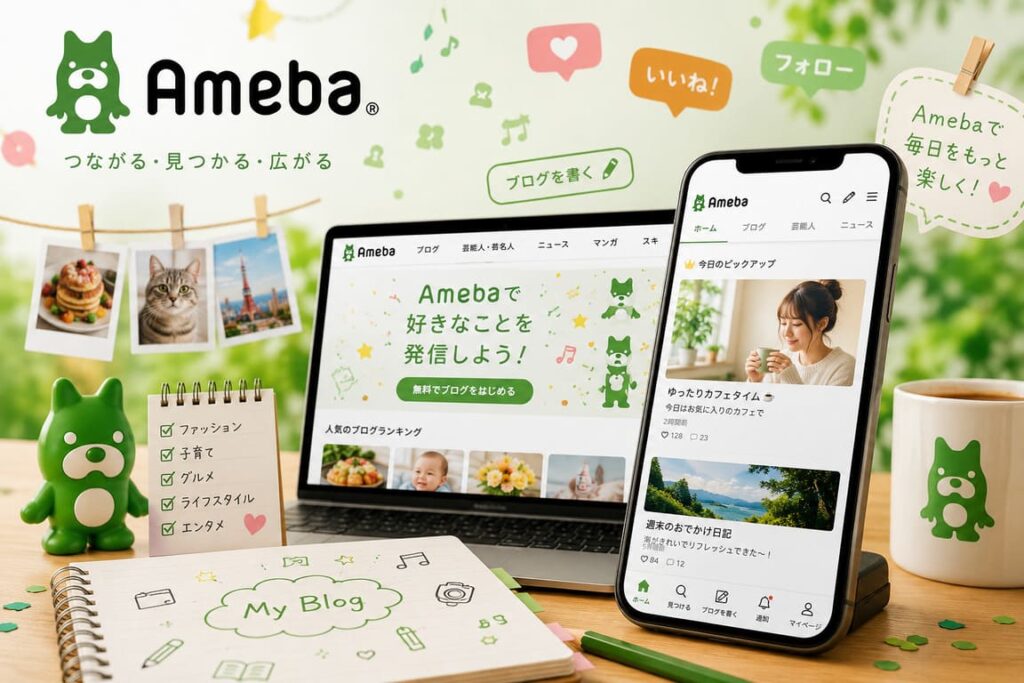

Ameba is one of the best-known internet brands in Japan. It is a blogging and social networking website operated under CyberAgent, and CyberAgent describes Ameba Blog as the nation’s largest and most popular blog service. The company also says it launched Ameba in 2004 and that the service has since become Japan’s largest blogging platform. That already tells you a lot: Ameba is not a niche blog host. It is a major consumer internet product with a long history and strong local identity.
If Wikidot feels like a tool for structured knowledge, Ameba feels like a media ecosystem built around personality, entertainment, and everyday online life. CyberAgent highlights that more than 20,000 celebrities have official blogs on Ameba and says those blog posts often become sources of news and online topics. That celebrity layer is important because it helps explain Ameba’s cultural position. It is not just a place where people keep journals. It is also a place where fans, creators, and media stories meet.
Wikipedia describes Ameba as a Japanese blogging and social networking website, and it notes that the service expanded beyond blogging into areas such as virtual communities and social games. Over time, Ameba launched products like Ameba Now, a microblogging service, and the Pigg virtual world, where users could create avatars, decorate rooms, and socialize in themed spaces. That wider product history shows that Ameba has often tried to be more than a blog host. It has worked as a broader lifestyle and community platform.
What makes Ameba.jp different
The first thing that stands out about Ameba is focus. Unlike global blogging tools that try to be everything for everyone, Ameba is very clearly shaped for the Japanese market. Wikipedia lists Japanese as the platform language and Japan as its main service area, while CyberAgent frames it inside its domestic media strategy. That local focus is one of Ameba’s biggest strengths. It understands the culture, the content style, and the audience it serves.
The second big strength is reach. A blogging platform becomes more valuable when readers are already there, and Ameba has that network effect. Celebrity blogs, entertainment content, and links to related services help keep attention inside the ecosystem. CyberAgent explicitly says Ameba Blog is both large and socially influential, which also creates business synergies for the group’s media and advertising operations. In simple terms, Ameba is not standing alone; it is part of a larger machine.
A third strength is device support. CyberAgent’s product page says Ameba is available on smartphone through app stores, Google Play, and browsers, and also on PC through the browser. The homepage also strongly pushes app use. That matters because modern blogging services live or die by mobile convenience, and Ameba clearly understands that mobile is central to its user experience.
Where Ameba.jp feels limited
Ameba’s biggest limitation is also its biggest strength: it is highly localized. For Japanese users, that is a major plus. For international users, it can be a barrier. The platform, community norms, and content style are built for Japan first. If you want a global publishing platform with multilingual support, flexible site ownership, and broad international discovery, other tools may be easier to use.
Another issue is platform identity. Ameba has done many things over the years: blogging, microblogging, avatar communities, social games, and app-based experiences. That makes the brand rich, but it can also make it feel less focused than a simple blogging platform. Wikipedia notes that the PC version of Pigg and related communities were shut down because of Adobe Flash’s end, while newer mobile alternatives replaced some of that experience. That history shows Ameba can adapt, but it also shows that some product lines have been fragile or tied to older technologies.
Still, for the audience it serves, Ameba remains strong. It is not trying to be a universal publishing framework. It is trying to be an active, entertainment-friendly, mobile-ready Japanese platform with social gravity. On those terms, it makes sense.
Who should use Ameba.jp
Ameba is best for:
- Japanese bloggers who want an established local audience
- creators and public figures who benefit from celebrity-driven traffic
- entertainment-focused publishers
- users who prefer mobile-first blogging
- readers who want blogs, pop culture, and social features in one ecosystem
If your goal is deep website customization or a technical knowledge base, Ameba is not the right fit. But if your goal is audience, visibility, and participation in a large Japanese online culture space, Ameba is a serious option.
Quick fact table for Ameba.jp
| Category | Details | Why it matters | Source |
|---|---|---|---|
| Owner | Operated under CyberAgent | Backed by a major Japanese internet company | CyberAgent Service Page |
| Launch | CyberAgent says Ameba launched in 2004 | Shows long-term market presence | CyberAgent Media Business |
| Market position | Described as Japan’s largest blogging service and the nation’s largest and most popular blog service | Indicates strong brand and audience reach | CyberAgent Media Business / CyberAgent Service Page |
| Celebrity presence | More than 20,000 celebrities have official blogs on Ameba | Helps drive media attention and reader traffic | CyberAgent Service Page |
| Ecosystem history | Included services like Ameba Now and virtual community products such as Pigg | Shows that Ameba developed beyond basic blogging | Wikipedia |
Interesting facts about Ameba.jp
Ameba is interesting because it blends blogging with entertainment culture in a way many Western platforms do not. CyberAgent says celebrity blog posts on Ameba often become news topics. That means the platform acts partly like a publishing tool and partly like a media signal amplifier. It is not just hosting content; it is helping shape conversations.
Another interesting fact is its virtual world history. Wikipedia describes Ameba Pigg as a space where users could customize avatars, decorate rooms, and socialize around replicas of famous landmarks. This made Ameba feel closer to a social universe than a plain blog service. Even though some older PC-based services were closed, that creative social layer remains one of the brand’s most distinctive historical features.
Ameba also matters inside CyberAgent’s bigger media strategy. CyberAgent says operating socially influential media creates synergies with advertising and other group businesses. So Ameba is not only a website for bloggers. It is part of a larger business model that connects content, audience, and monetization.
Final verdict on Ameba.jp
Ameba is a strong example of a platform that became powerful by knowing exactly who it serves. It is big, local, celebrity-aware, mobile-friendly, and deeply tied to Japanese internet culture. It is not the cleanest choice for global users or for people who want total site control. But if you want access to a large Japanese blogging ecosystem with real social momentum, Ameba has clear strengths that many generic blogging platforms cannot match.
FAQ about Ameba.jp
Is Ameba just a blogging site?
No. It is mainly known for blogging, but Wikipedia shows that it has also included social networking features, microblogging, virtual communities, and social games over time.
Who owns Ameba?
Ameba is operated under CyberAgent, which presents it as one of its core media products.
Why is Ameba important in Japan?
CyberAgent says it is Japan’s largest blogging service and describes Ameba Blog as the nation’s largest and most popular blog service. It also has a large celebrity presence, which helps make it socially visible.
Is Ameba good for non-Japanese users?
Usually only if they already understand Japanese or want to reach a Japanese audience. The platform is centered on Japan and Japanese-language use